Your Journey of Healing
Your Feelings Are Real, But They Do Not Define You | Christian Sunday School Lesson PDF
Your Feelings Are Real, But They Do Not Define You | Christian Sunday School Lesson PDF
Couldn't load pickup availability
Your Feelings Are Real, But They Do Not Define You | Sunday School Lesson PDF
Your feelings are real. They matter. They can tell you something important is happening inside you.
But they were never meant to tell you who you are.
Fear can say, “I’m not safe.”
Rejection can say, “I’m unwanted.”
Shame can say, “I’m not enough.”
Anxiety can say, “Everything is going to fall apart.”
Grief can say, “I will always feel this way.”
Those emotions may be genuine—but feelings are not always reliable interpreters of truth.
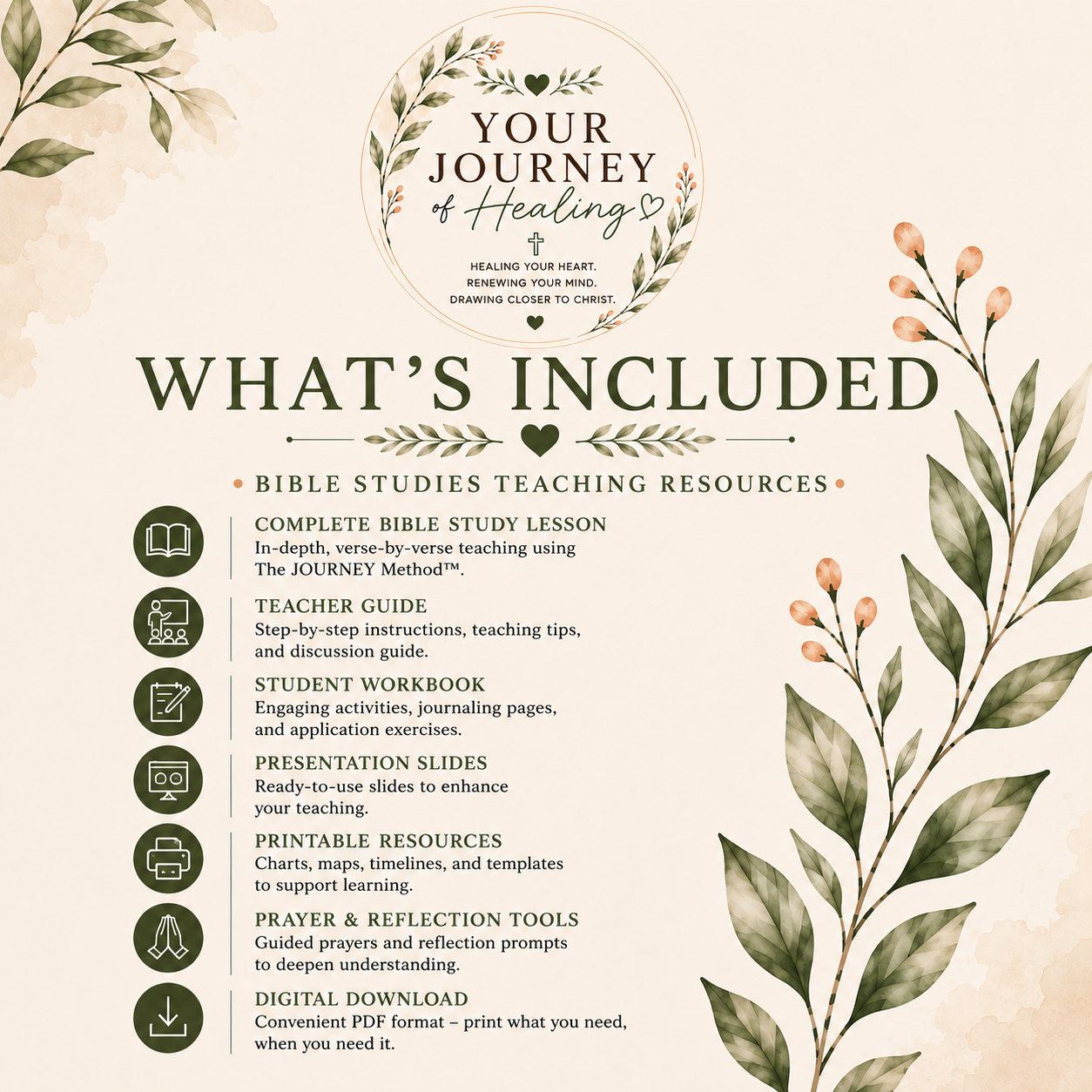
Your Feelings Are Real, But They Do Not Define You is a Scripture-centered Sunday School lesson designed to help believers understand the biblical place of emotions while learning to anchor their identity in what God says rather than what they temporarily feel.
Inside This Lesson
- Scripture-centered teaching on emotions and identity
- The difference between feeling something and believing it is true
- Biblical examples of people experiencing powerful emotions
- Understanding emotions without allowing them to become identity
- How circumstances influence feelings
- Recognizing emotional reasoning
- Identifying lies hidden beneath difficult emotions
- Renewing the mind with biblical truth
- Taking thoughts captive
- Identity in Christ
- Bringing emotions honestly before God
- Biblical lament and emotional honesty
- Practical application and reflection questions
- Group discussion prompts
- Prayer and personal response opportunities
Feelings Are Not the Enemy
The Bible does not portray emotion as spiritual weakness.
David grieved.
Hannah wept.
Elijah became discouraged.
Jeremiah lamented.
Peter experienced deep remorse.
Jesus wept.
Scripture does not teach us to become emotionless.
It teaches us to bring our whole selves before God.
The goal is not:
“Stop feeling.”
The goal is learning how to feel without allowing feelings to become our final authority.
“I Feel” Is Different From “I Am”
There is an important difference between:
“I feel rejected.”
and
“I am rejected.”
Between:
“I feel afraid.”
and
“I am powerless.”
Between:
“I feel like a failure.”
and
“I am a failure.”
Feelings describe an experience.
Identity describes who you believe yourself to be.
Problems begin when temporary emotions become permanent identity statements.
Feel It, Then Test It
Instead of automatically believing or suppressing an emotion, we can learn to examine it.
Ask:
What am I feeling?
What happened that triggered this feeling?
What am I believing because of it?
Is that belief actually true?
What does Scripture say?
This allows emotions to become information rather than dictators.
Jesus Understands Emotion
Jesus did not walk through His earthly ministry emotionally detached.
He experienced compassion.
Grief.
Anguish.
Righteous anger.
Sorrow.
He wept at Lazarus’s tomb.
In Gethsemane, He openly expressed deep distress.
Yet His emotions remained surrendered to the Father.
Jesus shows us that spiritual maturity is not the absence of emotion.
It is bringing emotion under the truth and direction of God.
Renewing the Mind
Romans 12:2 tells believers:
“Be transformed by the renewing of your mind.”
Healing often requires learning to recognize the beliefs attached to our emotions.
If rejection taught you:
“I am unwanted,”
God’s truth must answer.
If failure taught you:
“I am worthless,”
God’s truth must answer.
If abandonment taught you:
“Everyone will leave,”
God’s truth must answer.
We do not deny what happened.
We allow God to correct what the experience taught us about ourselves.
Your Identity Has a Stronger Foundation
Your identity is not determined by your worst day.
Your greatest mistake.
Someone else’s rejection.
A painful season.
Your current emotions.
Or the labels someone placed upon you.
For those who belong to Christ, identity begins somewhere stronger:
You are in Christ.
Chosen.
Loved.
Redeemed.
Forgiven.
God’s workmanship.
His child.
Being renewed.
Still becoming.
Feelings Can Change. Truth Remains.
Some days you may feel strong.
Other days you may feel fragile.
You may feel confident today and uncertain tomorrow.
But God’s truth does not change according to your emotional weather.
So acknowledge what you feel.
Bring it honestly before God.
Listen to what it may be revealing.
Then test what it is telling you against Scripture.
Because your feelings are real—
but they do not define you.
God does.
Key Themes: Emotions • Identity in Christ • Renewing the Mind • Biblical Truth • Thought Life • Healing • Emotional Honesty • Spiritual Growth
Key Scriptures: Psalm 42:5 • John 11:35 • Romans 12:2 • 2 Corinthians 10:5 • Ephesians 2:10 • Philippians 4:8 • Colossians 3:1–3
Format: Digital PDF — Instant Download
Perfect for Sunday School classes, women’s ministry, small groups, Bible study groups, or personal study.
Thank you for allowing Your Journey of Healing to be part of your journey. My prayer is that this lesson helps you acknowledge your emotions honestly while becoming increasingly grounded in the unchanging truth of who God says you are.
Remember this: you are worthy, you are loved.
Share