Your Journey of Healing
The Context of Warning | Christian Sunday School Lesson PDF
The Context of Warning | Christian Sunday School Lesson PDF
Couldn't load pickup availability
The Context of Warning | Sunday School Lesson PDF
DIGITAL PRODUCT — PDF DOWNLOAD
No physical product will be shipped.
Warnings matter.
But warnings also have context.
A verse removed from its setting can sound harsher, broader, or more frightening than the passage actually means.
Sometimes believers read a warning and immediately assume:
This must mean me.
I must be in danger.
I must have failed beyond recovery.
But faithful Bible study asks a deeper question:
Who was being warned, why were they being warned, and what was the warning meant to accomplish?
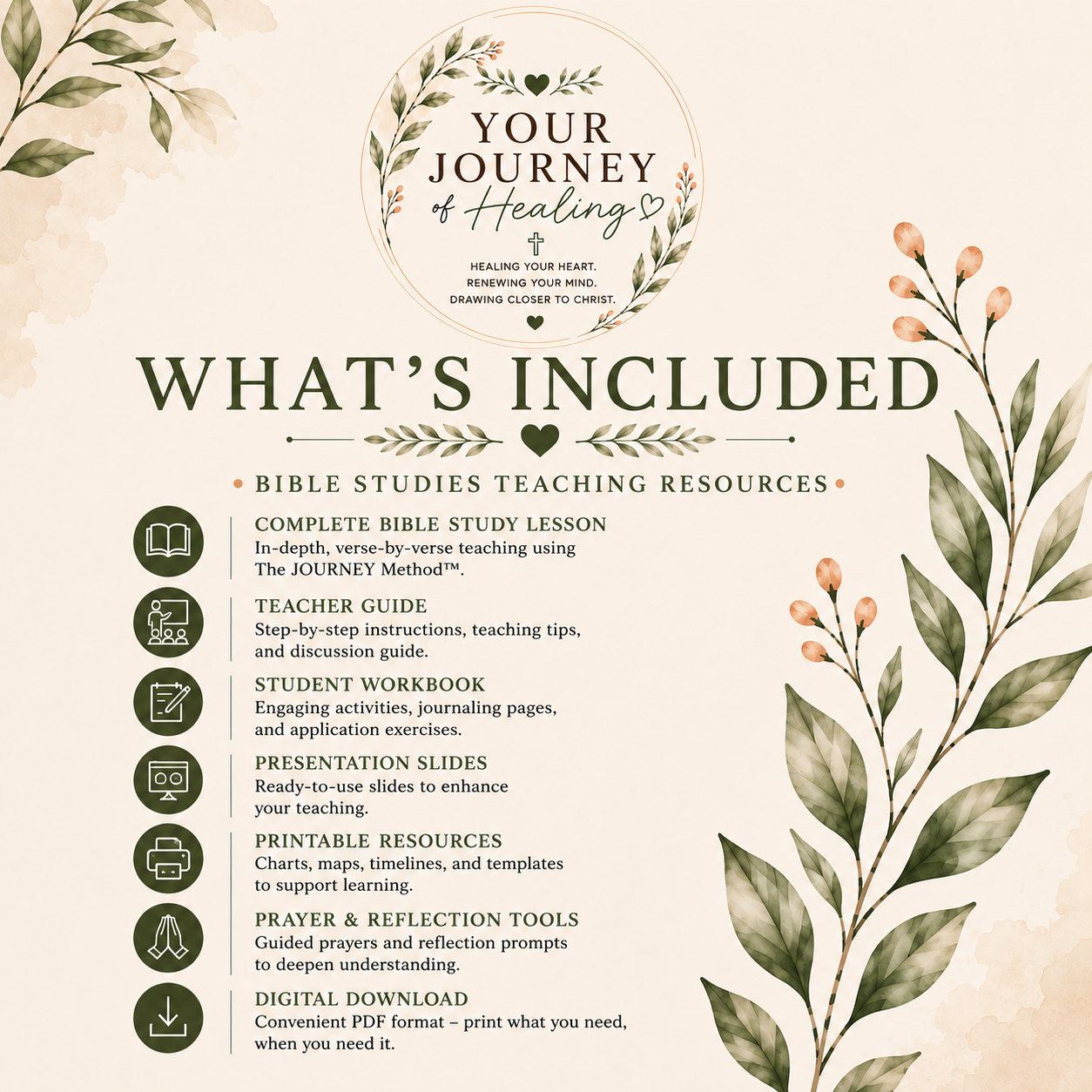
The Context of Warning is a Scripture-centered Sunday School lesson designed to help believers understand biblical warnings with greater clarity, discernment, and confidence.
Inside This Lesson
-
How to read biblical warnings in context
-
Why surrounding verses matter
-
Identifying the original audience
-
Historical and cultural background
-
The difference between warning and condemnation
-
The purpose of correction in Scripture
-
How fear can distort interpretation
-
Avoiding isolated proof-texting
-
Understanding conditional warnings
-
Distinguishing conviction from panic
-
How warnings can function as grace
-
The relationship between obedience and assurance
-
Applying difficult passages wisely
-
Practical application and reflection questions
-
Group discussion prompts
-
Prayer and personal response opportunities
A Warning Is Not Always a Verdict
Biblical warnings often function as invitations to:
Pay attention.
Turn back.
Remain faithful.
Avoid danger.
Remember truth.
Respond wisely.
A warning is not always the same thing as final judgment.
Sometimes the warning itself is evidence of mercy.
God warns because He wants His people to respond.
Context Changes Everything
Imagine hearing:
“Do not go outside.”
Without context, the statement sounds restrictive.
But if the next sentence says:
“A tornado is approaching,”
the warning suddenly makes sense.
Biblical interpretation works similarly.
We need to know:
What happened before?
What comes after?
Who is speaking?
Who is listening?
What problem is being addressed?
What larger biblical truth surrounds the passage?
Context protects us from misunderstanding.
Who Is Being Warned?
Some warnings are directed toward:
Israel under the Mosaic covenant.
False teachers.
Unrepentant communities.
Religious leaders.
Specific churches.
Believers tempted to drift.
People rejecting God’s truth.
Knowing the audience helps determine how the passage should be applied today.
Not every warning should be transferred word-for-word to every believer without examining its setting.
Warning and Grace Belong Together
Warnings can feel negative.
But Scripture often uses warnings as part of God’s loving care.
A road sign that says:
BRIDGE OUT
is not trying to ruin your trip.
It is trying to keep you from danger.
In the same way, God’s warnings reveal that our choices matter.
They call us toward wisdom, repentance, faithfulness, and life.
Conviction Versus Condemnation
Conviction says:
This needs to change. Come back to God.
Condemnation says:
You are hopeless. There is no way back.
Those voices are not the same.
Romans 8:1 reminds believers:
“There is therefore now no condemnation to them which are in Christ Jesus.”
Biblical correction should lead us toward God, not convince us that grace has disappeared.
Fear Can Misread Scripture
When we are already anxious, we may read every difficult passage as though it is directed personally at us.
We can begin searching Scripture for evidence that something terrible is about to happen.
That is not careful interpretation.
Good Bible study slows down.
Reads the whole passage.
Looks at context.
Compares Scripture with Scripture.
And remembers the character of God.
Difficult Passages Require Humility
Some biblical warnings are genuinely difficult.
Faithful Christians may interpret certain passages differently.
That should produce humility rather than panic.
We can study carefully.
Consult the broader biblical witness.
Listen to wise teachers.
Ask questions.
And remain confident that truth does not require fear-driven interpretation.
The Purpose of Warning
Warnings ultimately ask us to respond.
Pay attention.
Do not drift.
Do not harden your heart.
Do not follow deception.
Do not ignore what God has said.
Return.
Remain.
Persevere.
Warning can become one of the ways God keeps His people awake and attentive.
Read the Whole Story
One verse can sound frightening.
The whole passage may reveal:
Grace.
Invitation.
Correction.
Promise.
Restoration.
Hope.
That is why context matters.
The goal is not to remove the seriousness of biblical warnings.
The goal is to understand them accurately.
Let Scripture Speak for Itself
Before reacting to a warning, ask:
What does the passage actually say?
What does it not say?
Who is being addressed?
What is the warning trying to prevent?
What response is God calling for?
How does this fit with the rest of Scripture?
Those questions help move us from fear-based reading toward faithful understanding.
Warnings matter.
But context matters too.
And when Scripture is read carefully, warnings become not weapons of panic—but invitations to wisdom, faithfulness, and deeper trust in God.
Key Themes: Biblical Context • Warning Passages • Discernment • Bible Interpretation • Conviction • Grace • Obedience • Christian Living • Spiritual Growth
Key Scriptures: Hebrews 2:1 • Hebrews 3:12–15 • Romans 8:1 • 2 Timothy 2:15 • 2 Timothy 3:16–17 • 2 Peter 3:17–18
Format: Digital PDF — Instant Download
Perfect for Sunday School classes, adult Bible study, discipleship groups, women’s ministry, or personal study.
Remember this: you are worthy, you are loved.
Share