Your Journey of Healing
Obadiah Bible Commentary PDF | Digital Bible Study | Verse-by-Verse Old Testament Study
Obadiah Bible Commentary PDF | Digital Bible Study | Verse-by-Verse Old Testament Study
Couldn't load pickup availability
Obadiah Bible Commentary PDF | A Study of Pride, Justice & Restoration
“The pride of your heart has deceived you.” — Obadiah 3
Obadiah is the shortest book in the Old Testament—but its message is anything but small.
In only 21 verses, Obadiah confronts pride, betrayal, injustice, and the dangerous temptation to celebrate another person’s downfall. At the center of the prophecy is Edom, a nation closely related to Israel through Esau but guilty of standing against Judah during a time of devastation.
Edom believed its position made it secure.
God said otherwise.
Obadiah Bible Commentary is a Scripture-centered study through all 21 verses of this powerful Minor Prophet, exploring Edom’s history, the danger of pride, God’s justice, the Day of the LORD, restoration, and God’s ultimate sovereignty.
Inside This Study
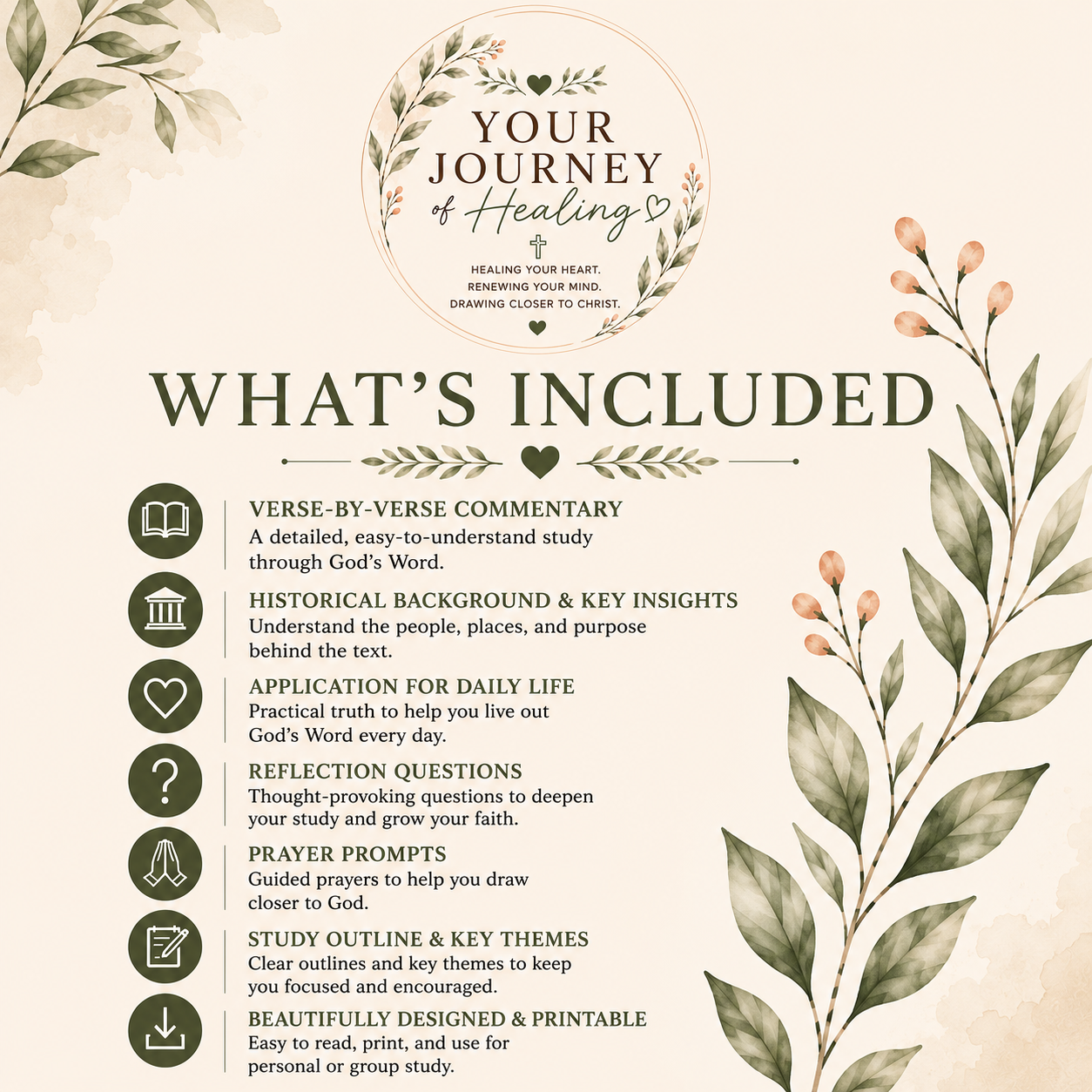
- Commentary through all 21 verses of Obadiah
- Historical background of Edom and Judah
- Jacob and Esau and the origins of Israel and Edom
- Edom’s hostility toward God’s people
- “The pride of your heart has deceived you”
- The danger of false security
- Edom’s betrayal during Judah’s suffering
- God’s response to violence and injustice
- The biblical principle of reaping what we sow
- The Day of the LORD
- Judgment and restoration
- The significance of Mount Zion
- God’s sovereignty over the nations
- Practical application and reflection questions
The Deception of Pride
Obadiah identifies Edom’s central problem:
Pride.
Edom’s mountainous territory provided natural defenses, creating a sense of security.
The people asked:
“Who can bring me down to the ground?”
God answers that question.
No position is high enough, no defense strong enough, and no human power great enough to place someone beyond His authority.
Pride is dangerous because it does more than elevate us.
It deceives us.
It convinces us that we are safer, stronger, wiser, or more independent than we actually are.
When Someone Else Falls
Edom’s sin was not limited to pride.
When Jerusalem suffered, Edom watched.
Then Edom rejoiced.
Instead of helping a related people during disaster, they participated in their humiliation and took advantage of their vulnerability.
Obadiah repeatedly warns:
“You should not…”
You should not gloat.
You should not rejoice over their destruction.
You should not seize their wealth.
You should not stand at the crossroads to harm survivors.
God cares not only about what we do to people but also about the posture of our hearts when they suffer.
As You Have Done
Obadiah declares:
“As you have done, it will be done to you.”
Edom believed it could exploit Judah’s weakness without consequence.
God says otherwise.
Human actions matter.
How we treat vulnerable people matters.
What we celebrate matters.
What we do when someone else is down matters.
God sees injustice even when those committing it believe no one will hold them accountable.
The Day of the LORD
Obadiah expands from Edom to something larger:
“The day of the LORD is near for all nations.”
Edom’s judgment becomes part of a broader biblical theme.
Human kingdoms rise and fall.
Political power changes.
Nations appear invincible and then disappear.
But God remains sovereign over history.
The Day of the LORD reminds us that history is ultimately moving toward God’s purposes—not humanity’s.
But on Mount Zion
Judgment is not the final word.
Obadiah turns toward restoration:
“But on Mount Zion will be deliverance.”
The people who experienced loss will not remain forgotten.
God’s purposes extend beyond judgment toward restoration and deliverance.
The book ends with a powerful declaration:
“And the kingdom will be the LORD’s.”
That is where Obadiah has been heading all along.
Edom is not ultimately sovereign.
Judah is not ultimately sovereign.
The nations are not ultimately sovereign.
The kingdom belongs to the LORD.
Obadiah reminds us that pride eventually falls, injustice is seen, betrayal matters, God defends His purposes, and earthly power never gets the final word.
Key Themes: Pride • Edom • Betrayal • God’s Justice • Judgment • Day of the LORD • Restoration • Deliverance • God’s Sovereignty
Key Scriptures: Obadiah 3–4 • Obadiah 10–15 • Obadiah 17 • Obadiah 21
Format: Digital PDF — Instant Download
Thank you for allowing Your Journey of Healing to be part of your journey through God’s Word. My prayer is that this study helps you understand Obadiah more deeply, recognize the deception of pride, and rest in the truth that ultimately the kingdom belongs to the LORD.
Remember this: you are worthy, you are loved.
Share