Your Journey of Healing
A Cry from the Depths | Christian Sunday School Lesson PDF
A Cry from the Depths | Christian Sunday School Lesson PDF
Couldn't load pickup availability
A Cry from the Depths | Christian Sunday School Lesson PDF
“Out of the depths I cry to you, LORD.” — Psalm 130:1
Some prayers begin in peaceful places.
Others begin in the depths.
The place where grief feels overwhelming.
Where regret is heavy.
Where answers have not come.
Where God seems quiet.
Where all you have left is a cry:
“Lord, hear my voice.”
Psalm 130 does not begin with everything resolved. It begins with someone calling to God from a place of profound distress—and slowly moves from desperation toward forgiveness, waiting, hope, and redemption.
A Cry from the Depths is a Scripture-centered Sunday School lesson exploring Psalm 130 and what it means to seek God honestly when life feels dark, painful, uncertain, or overwhelming.
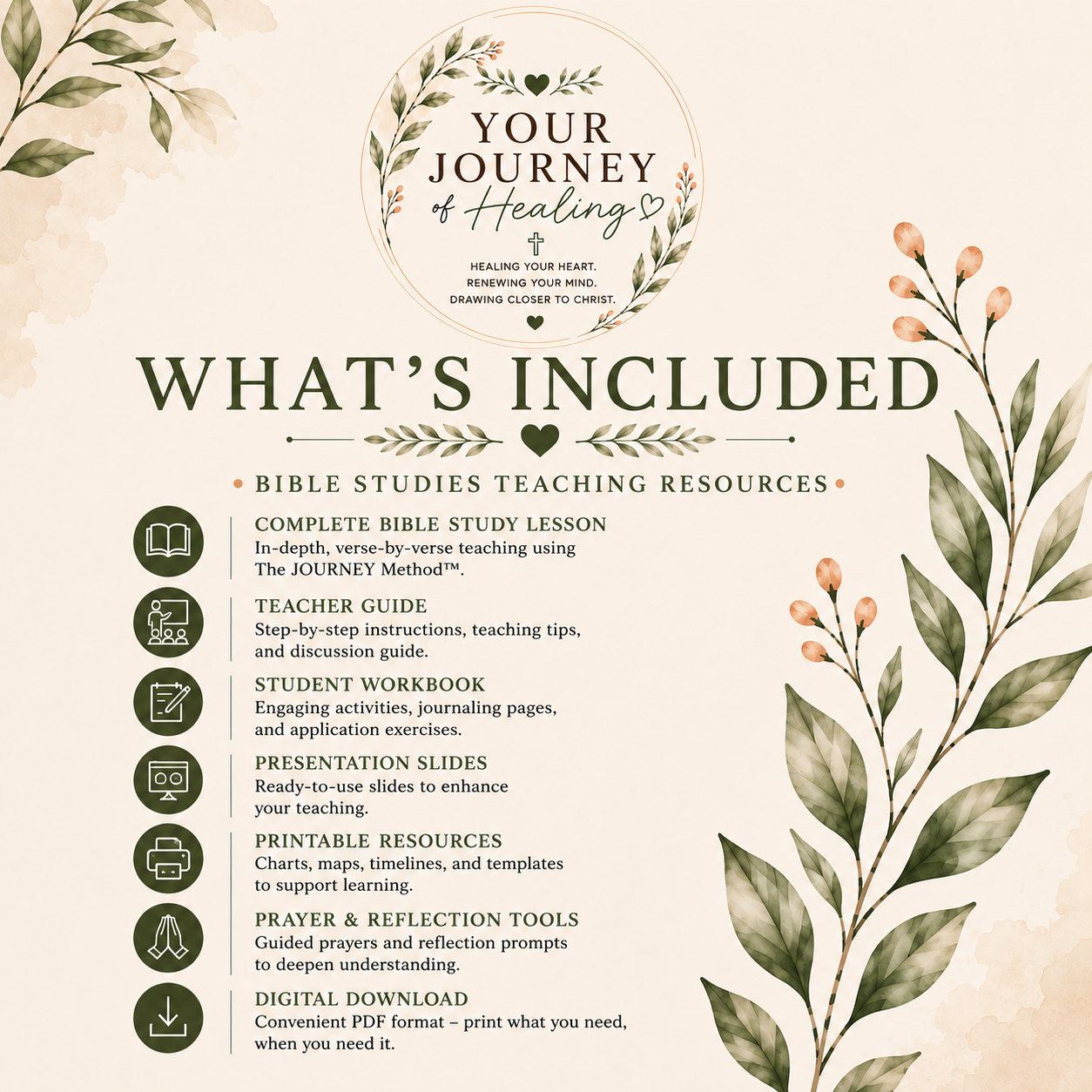
Inside This Lesson
- In-depth teaching from Psalm 130
- Understanding biblical lament
- What “the depths” represented to the psalmist
- Bringing honest pain before God
- Prayer when words are difficult
- God’s willingness to hear our cries
- Sin, guilt, and forgiveness
- Reverence produced by grace
- Waiting for the LORD
- What biblical waiting really means
- Placing hope in God’s Word
- Moving from personal pain toward confident hope
- God’s promise of redemption
- Practical application and reflection questions
- Group discussion prompts
- Prayer and personal response opportunities
Out of the Depths
The psalmist does not hide where he is.
He calls it:
“The depths.”
Scripture makes room for places like this.
Faith does not require us to pretend everything is fine before approaching God.
We can come from grief.
Confusion.
Fear.
Regret.
Loneliness.
Disappointment.
The depths do not disqualify us from prayer.
Sometimes they become the very place where our most honest prayers begin.
Lord, Hear My Voice
The psalmist cries:
“Let your ears be attentive to my cry for mercy.”
This is not polished prayer.
It is desperate prayer.
There are seasons when we have carefully chosen words for God.
And there are seasons when all we have is:
Help me.
Hear me.
I need You.
God does not require eloquence before He listens.
If You Kept a Record
Psalm 130 turns from suffering toward sin:
“If you, LORD, kept a record of sins, Lord, who could stand?”
The answer is:
No one.
But the next statement changes everything:
“But with you there is forgiveness.”
Our hope does not rest upon our ability to present ourselves perfectly before God.
It rests upon His mercy.
The God we cry to from the depths is also the God who forgives.
I Wait for the LORD
The situation does not immediately change.
So the psalmist waits.
But biblical waiting is not hopeless resignation.
He says:
“In his word I put my hope.”
Waiting becomes an act of trust.
We may not know when the answer will come.
We may not know how God will work.
But we can anchor ourselves in what He has already spoken.
More Than Watchmen Wait for Morning
The psalmist compares his waiting to watchmen waiting for morning.
A watchman may not know the exact moment light will break across the horizon.
But he knows morning is coming.
That is the picture of biblical hope.
The darkness is real.
But darkness is not permanent.
From “I” to “Israel”
Something beautiful happens near the end of Psalm 130.
The prayer begins:
“I cry to you.”
But eventually the psalmist says:
“Israel, put your hope in the LORD.”
Personal pain becomes testimony.
The person crying from the depths becomes someone encouraging others to hope.
Sometimes God meets us in a difficult season so deeply that our survival eventually becomes encouragement for someone else.
There Is Redemption
Psalm 130 ends far differently than it begins.
It starts in the depths.
It ends with redemption.
The circumstances may not yet be completely resolved, but the psalmist has remembered who God is.
With Him there is forgiveness.
With Him there is unfailing love.
With Him there is full redemption.
So when you find yourself in the depths:
Cry out.
Tell God the truth.
Receive His mercy.
Wait for Him.
Put your hope in His Word.
And remember:
The depths are a place you may pray from. They are not proof that God has left you there alone.
Key Themes: Biblical Lament • Prayer • Grief • Forgiveness • Waiting • Hope • Mercy • Redemption • God’s Word
Key Scriptures: Psalm 130:1–8 • Psalm 40:1–3 • Psalm 42:5 • Lamentations 3:25–26 • Romans 8:24–25
Format: Digital PDF — Instant Download
Perfect for Sunday School classes, grief ministry, women’s ministry, small groups, Bible studies, or personal study.
Remember this: you are worthy, you are loved.
Share